What Is an AI Chatbot for Small Business?
An AI chatbot is software that uses artificial intelligence to communicate with website visitors through a conversational chat interface.
Unlike traditional chatbots that rely heavily on fixed buttons and predefined responses, modern AI chatbots can understand natural-language questions and generate relevant answers based on the information provided to them.
For a small business, an AI chatbot can act as a 24/7 virtual assistant for tasks such as:
- Answering frequently asked questions
- Explaining products and services
- Collecting contact information
- Qualifying potential customers
- Appointment booking information
- Helping customers find products
- Providing basic customer support
- Sending visitors to the right pages
- Connecting customers with a human representative
Instead of requiring your team to answer every repetitive question manually, the chatbot can handle many conversations automatically.
Why Do Small Businesses Need an AI Chatbot?
Large companies often have dedicated customer support and sales teams. Small businesses usually have fewer employees and limited resources. This makes repetitive customer questions particularly expensive in terms of time.
Imagine a customer visits your website and asks: "What are your opening hours?"
Another asks: "Do you offer free delivery?"
Another wants to know: "How can I book an appointment?"
Your team could answer these questions individually, but an AI chatbot can provide immediate answers automatically. This allows your employees to spend more time on tasks that require human judgment, sales conversations, and customer relationships.
10 Ways Small Businesses Can Use AI Chatbots
1. Answer Frequently Asked Questions: One of the simplest uses of an AI chatbot is answering common questions.
Your chatbot can provide information about:
- Opening hours
- Pricing
- Services
- Delivery info
- Returns
- Shipping
- Payment methods
- Locations
- Contact information
- Policies
Customers don't need to search through multiple pages to find basic information.
2. Generate Leads 24/7: Your website may receive visitors outside normal business hours. Without a chatbot, many of those visitors may leave without contacting you.
An AI chatbot can start a conversation and ask questions such as:
- What service are you interested in?
- What type of help do you need?
- When would you like to get started?
- What is the best way to contact you?
The chatbot can then collect the visitor's contact details so your team can follow up.
3. Qualify Potential Customers: Not every website visitor is a good fit for your business.
An AI chatbot can ask qualifying questions before sending a lead to your sales team.
For example, a real estate business could ask:
- Are you buying or renting?
- Which location are you interested in?
- What is your approximate budget?
- When are you planning to move?
Your team receives more useful information before starting the conversation.
4. Provide Customer Support: Customers often need help with simple issues.
An AI chatbot can provide immediate answers to questions about:
- Orders
- Products
- Services
- Account information
- Shipping
- Returns
- General troubleshooting
For complex problems, the chatbot can transfer the conversation to a human agent.
5. Recommend Products and Services: AI chatbots can help customers decide what to buy.
For example, an online store could ask:
"What type of product are you looking for?"
The chatbot can then recommend relevant products based on the customer's requirements.
This creates a more interactive shopping experience than simply displaying a product catalog.
6. Help Customers Book Appointments: Service-based businesses can use AI chatbots to provide customers with clear information about their appointment process.
Examples include:
- Salons
- Dental practices
- Consultants
- Agencies
- Real estate businesses
- Repair services
- Fitness businesses
The chatbot can explain how to schedule an appointment, where to book, available booking methods, required information, and what customers should expect before their appointment, based on the business's knowledge base.
7. Help Visitors Navigate Your Website: Visitors don't always know where to find the information they're looking for. Instead of making them search through your website, the chatbot can direct them to the appropriate page.
For example:
"I'm looking for your pricing."
The chatbot can provide the relevant information or direct the visitor to the pricing page.
8. Support Customers After Business Hours: One of the biggest advantages of AI chatbots is availability.
Your business might close at 6 PM, but your website doesn't.
A chatbot can continue answering questions and capturing leads overnight.
That means potential customers don't necessarily have to wait until the next morning to get a response.
9. Reduce Repetitive Work: Small teams often spend significant amounts of time answering the same questions.
An AI chatbot can automate repetitive conversations so employees can focus on more valuable work.
This doesn't mean replacing your team. Instead, it allows your team to spend less time on routine questions.
10. Improve Website Engagement: A visitor who lands on your website may not know what to do next.
A chatbot can proactively help visitors by asking:
"How can I help you today?"
This simple interaction can encourage visitors to explore your products, services, or contact options.
Benefits of AI Chatbots for Small Businesses
A chatbot can support your business around the clock, answering customer questions and collecting leads even outside regular business hours. By providing immediate responses to common questions, it helps customers get the information they need without waiting for an employee to become available. Automating repetitive inquiries also reduces the workload on your support team, allowing employees to focus on more important tasks. At the same time, chatbots can engage website visitors who might otherwise leave without contacting your business, helping generate more leads. Since responses can be based on your approved business information, customers receive consistent and reliable answers across conversations. Overall, a chatbot creates a faster, more convenient, and better customer experience while improving business efficiency.
24/7 Availability
A chatbot doesn't need to follow your business hours. It can answer questions and collect leads around the clock.
Faster Customer Responses
Customers don't have to wait for an employee to become available. They can receive immediate answers to common questions.
Lower Support Workload
Automating repetitive questions can reduce the number of routine conversations your employees need to handle.
More Leads
A chatbot can engage visitors who might otherwise leave your website without contacting you.
Consistent Answers
Your chatbot can provide information based on your approved business content, helping maintain consistency across conversations.
Better Customer Experience
Customers generally prefer getting useful information quickly rather than waiting for a response.
AI Chatbot vs. Traditional Chatbot
Not all chatbots work the same way. Traditional chatbots often depend on predefined rules, keywords, menus, and decision trees. For example:
- Customer: What are your prices?
- Bot:
- Pricing
- Products
- Support
The customer must select the appropriate option. AI chatbots can understand more natural questions. For example:
Customer: "How much does your premium service cost per month?"
The AI chatbot can understand the intent and provide a relevant response based on its available business information. This makes AI chatbots more flexible for real-world conversations.
How to Add an AI Chatbot to Your Small Business Website
1. Easy Setup: Small businesses usually don't have dedicated developers. Look for a chatbot that can be installed and configured without complicated coding.
2. Website Training: The chatbot should be able to learn from your business information, such as:
- Website pages
- FAQs
- Documentation
- Product information
- Policies
- Service descriptions
The better the chatbot understands your business, the more useful its answers can be.
3. Lead Capture: If generating leads is important, make sure the chatbot can collect visitor information.
4. Human Handoff: AI shouldn't handle every conversation.
Look for a solution that allows customers to reach a human when necessary.
5. Integrations: Depending on your business, you may want integrations with tools such as:
- CRM platforms
- E-commerce platforms
- Marketing tools
- Booking systems
6. Analytics: Analytics can help you understand:
- What customers ask
- Which questions the chatbot can't answer
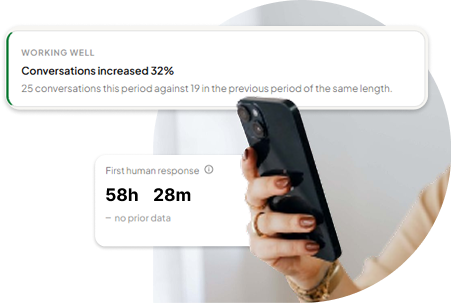
- How many conversations occur
- How many leads are generated
- Which pages generate the most conversations
This information can help you continuously improve your customer experience.
Is an AI Chatbot Worth It for a Small Business?
For many small businesses, an AI chatbot can be worthwhile when it solves a specific business problem. The strongest use cases are businesses that:
- Receive frequent website questions
- Need more leads
- Have limited customer support resources
- Operate outside traditional business hours
- Sell products online
- Offer appointment-based services
- Have a large FAQ or knowledge base
- Want to improve website engagement
The goal shouldn't be to add AI simply because AI is popular. The goal should be to use AI to create a better customer experience while saving your team time.
Why Choose PluginChatBot?
PluginChatBot helps businesses add an AI-powered chatbot to their websites and use their existing business information to answer visitor questions.
Instead of forcing customers to search through your entire website, you can give them a conversational way to find the information they need.
PluginChatBot can be useful for businesses that want to:
- Answer customer questions automatically
- Generate leads
- Provide 24/7 website support
- Train a chatbot using their own content
- Improve website engagement
- Connect visitors with human support when needed
If you're looking for a simple way to add an AI chatbot to your business website, PluginChatBot can be a practical place to start.
Get More From Your Small Business Website With AI
An AI chatbot can give small businesses something that is otherwise difficult to achieve: 24/7 customer engagement without requiring someone from the team to answer every question manually.
From answering FAQs and generating leads to supporting customers and recommending products, there are many ways businesses can use AI chatbots.
The key is to start with a clear goal, provide accurate business information, make human support available when necessary, and continuously improve the chatbot based on real customer conversations.
For small businesses looking to improve customer support, capture more leads, and make their website more useful, an AI chatbot can be a valuable addition to the digital customer experience.